DMCA Information Privacy Policy
Latest Posts :
find
Recent Posts
Showing posts with label Animals. Show all posts

World Fastest Land Animals Top 10 (Amazing)

Our animal kingdom is filled with natural runners. Running is necessary for the survival in the wild where the weak becomes the food of the strong. If an animal lacks the ability to run from danger or to chase their prey, then it is most likely that animal will die soon. There are other faster animals than the animals listed here that travel in water and on air. But for this purpose, we will just consider land animals.

10. Coyote


Coyote can be found in North America. It is carnivorous and mostly feeds on rodents and farm animals. They are smaller than wolves and can run as fast as 43 mph. They cannot just run fast but they can also jump really high. One unique attribute of coyote is their hearing ability, they can hear a frequency of 80 KHz.

9. Grey Fox


When you look at a grey fox, you will not believe that an animal this size can really run fast enough to be included in the list of top ten fastest land animals. Grey fox is a carnivorous animal that is included in the dog family. It was noted that these animals can attain a top speed of 44 mph.

8. Elk


An elk is one of the largest mammals in North America and East Asia. With its body mass, an elk is a very tempting food for carnivorous animals. Nature has given the elk a speed of 45 mph to be able to outrun its predators.

7. Cape Hunting Dog


Also known as wild hunting dog, it can run as fast as 46 mph. Hunting dog is native to Africa and weigh around 35 to 75 pounds. These animals may run fast but they had trouble outrunning the threat of extinction. Cape hunting dog is one of the most endangered species in Africa.

6. Lion


You might have seen them on TV chasing their helpless prey. Lions are the one of the largest animals in the cat family. They are called the king of the jungle for good reasons. They can run as fast as 48 mph, a speed enough to chase their daily food.

5. Quarter Horse


They derived their name from their reputation of leaving their competitors in a horse race by one quarter of a mile or less. Because of their running ability, quarter horses are used in some of the world’s most famous races. They can run as fast as 50 mph.

4. Springbok


While most animals listed here use their speeds to chase the prey, springbok uses its pace for running away from predators. They are herbivores and have a peculiar way of moving because simultaneously they jump as they run. They have a top speed of 52 mph.

3. Wildebeest


The wildebeest is known for their teamwork in pushing away predators. They live in herds and mainly eat herbs. They have strong and sturdy bodies with sharp horns. Because of their body structures, they are able to defend themselves against predators and coupled with their 55 mph top speed, they are almost hard to kill.

2. Pronghorn Antelope


The pronghorn antelope is now the fastest land animal in the northern part of the world after the American cheetah became extinct. Anatomically speaking, the pronghorn antelopes have large lungs and heart to support its stunning speed of 63 mph. The eye sight of pronghorn antelope is extraordinary because it can see as clear as a high powered binocular. Because of its weight of about 90 to 120 pounds, it prefers crossing underneath objects rather than jumping over them.

1. Cheetah


The fastest animal in this list should have been obvious by the time we started our countdown. Cheetah is shown in many car advertisements and a favorite animal when it comes to portraying speed and agility. The cheetah can run at a whooping speed of 70 mph. As fast as they may seem, but they cannot run for too long because they will run out of breath very soon. Cheetahs are great predators not just because of their speed but also because of their strong jaws and sharp claws.

Most Endangered Animals Top 10 (Amazing)

Most Endangered Animals Top 10 (Amazing)
It is undeniable that it is hard to make a list of endangered animals because of the number of animal species that are currently facing extinction. As this might be the case, it is only fitting to write this article according to World Wildlife Fund (WWF) list.

10. Mako Shark


Mako shark is killed primarily because of its tender meat and fin. To make things worse, the shark’s fin is considered to be of great value medicinally. Some poachers will just strip off their fins and throw it back to the sea and leave it to die there.

9. Green-Cheeked Parrot


Because of its beautiful colors and intelligence capabilities, the green-cheeked parrot is being sold across the United States and Mexico. The great demand for these birds has made its population rapidly decrease.

8. Tiger


The numbers of tiger in the wild is getting lesser each year because of poachers. Tigers are just occupying 7 percent of their original habitats and if this will continue, they will soon face extinction like their relatives in Asian countries.

7. Hawksbill Turtle


An adult hawksbill turtle can measure as long as 1 meter. Because of the low birth rate of these turtles combined with the illegal trade of its shell, the hawksbill is now exponentially vulnerable to extinction.

6. Alligator Snapping Turtle


The meat of alligator snapping turtle is considered to be an exotic food. Due to international market demands for an alligator snapping turtle and the deforestation that is taking place in North America, this turtle is now rapidly decreasing in numbers.

5. Polar Bears


The polar bears are among the earliest species that were threatened by the escalating global warming issue. With ice caps melting, it is estimated that within the next century the polar bears will be completely wiped off the face of the icy arctic.

4. Beluga Sturgeon


Once believed to be extinct until one beluga sturgeon was found alive in the Caspian Sea, it is now considered to be an ancient living fossil. Because of its delicious meat, it is highly in-demand at exotic restaurants. Because of it is so expensive, many poachers are tempted to hunt down beluga sturgeon.

3. Giant Panda


This is one of the iconic animals that represents all the endangered species of the world. There are now only less than 1,000 pandas in the wild. Because of their beautiful and soft fur, they are sought after by poachers. In addition to this, their natural habitats are now disappearing because of deforestation.

2. Mountain Gorilla


Sad to say, there are only about 720 surviving gorillas in the wild and another 200 of them are living in the Virunga National Park. Thankfully, the active conservation efforts of the Democratic Republic of Congo have paid off. There had been a 14 percent increase in its population for the last 12 years.

1. Black Rhino


During the last few decades, the population of black rhinos has decreased by 90 percent. There are now about 3000 rhinos in the world today and if poaching continues, they are believed to get extinct within the next few years.
The list above may change. Some may increase, and other may decrease even more. May be, by the next time someone will make a list of these endangered species, one of the animals listed here may be officially extinct. This is the sad state of our Mother Earth. While there are efforts made to salvage these animals, it is never enough as long as there are greedy people who are motivated by their selfish ambitions. It is time to make a stand. It is time to make a change and the change starts with you.

World Most Venomous Snakes Top 11 (Amazing)

Most people will likely be scared of snakes because of their notorious reputation. According to statistics, there are around thousands of people that who are being bitten by snake. Thankfully, only a small percentage of the total snake species are venomous. This is the reason that most cases of snake bites are not fatal. As this might be the case, venomous snakes are scattered all over the world. Because of lack of knowledge and information about snakes, most people will have a hard time identifying venomous snakes from those non-venomous snakes. As a result, people will generally assume that all snakes are venomous thus increasing the fear of snakes. This article gathered the top ten most venomous snakes. Though this list was made with great amount of care, it may change as research and other studies are conducted. But for now, here are the top ten most venomous snakes.

11. Death Adder


This snake is native in Australia and New Guinea. Its venom is neurotoxin which means that it targets the nervous system of its victim. A bite will cause paralysis of the body and can potentially cause death within 6 hours when paralysis hits the lungs. Before an antivenin was successfully created, there is a 1 out 2 persons who will die from a death adder’s bite. It has the quickest strike among all snakes with just 0.13 of a second.

10. Philippine Cobra


As the name suggest, this snake is commonly found in the Philippines. While most cobras do not have any right to be in this list, the Philippine cobra is the deadliest species of all cobras. The dangerous thing about Philippine cobra is that it is able to spit its venom up to 3 meters. A single drop of its venom can kill an adult within thirty minutes. Its venom targets the brain, lungs, and heart.

9. Tiger Snake


Native to Australia and Tasmania, tiger snakes have yellow-orange stripes like that of a tiger. The survival rate for a person bitten by tiger snake is 30-40 percent and will die within just 30 minutes. The good thing about tiger snakes is that they are not aggressive and they normally will flee but it can become aggressive when cornered.

8. Australian Brown Snake


While it is native to Australia, it can also be found in Papua New Guinea and Indonesia. The brown snake can be very aggressive and will chase its target in a very swift manner. It will strike a target multiple times making survival even more difficult. Its venom is a neurotoxin and blood coagulant. A brown snake will more likely stand its ground for a fight. There is no antivenin formulated against brown snake thus making it more fatal.

7. Inland Taipan


Just like the brown snake, it can be found in Australia and known to be the most venomous land snake in the world. Fortunately, taipan snake prefers to flee rather than biting. It will only strike when provoked or being threatened. One bite of a Taipan snake is enough to kill 100 persons. All reported bites resulted from people who keep them as pets or those people who hunt them.

6. Diamond Rattlesnake


Known because of its famous tell tale rattle on its tail, the diamond rattlesnake is the deadliest snake in the North and South Americas. Rattlesnake is made more dangerous because it can strike as far as 2/3rd of its body length. Young diamond rattlesnakes are deadlier compared to adults because they do not know how to control the amount of venom injected to their victims. The venom of a rattlesnake can destroy cells and tissues, paralyze heart and lungs, and altering blood clotting. Most victims of diamond rattlesnakes are being amputated just to save the life of that person.

5. Mozambique Spitting Cobra


Native to Africa, Mozambique spitting cobra is the second deadliest snake in Africa. The bitten area will have a localized tissue necrosis and will result to amputation or removal of that body part. When venom gets contact with the eyes, it can cause blurred vision and even blindness. It can stand up to two-thirds of its body length and spit venom for 2-3 meters. It prefers to spit venom rather than biting and will even play dead to prevent further confrontation. When in a confined area like a tube the reptile will bite instead of spit. This is due to its aggressiveness.

4. Egyptian Cobra


This is a snake responsible for most of snake bite fatalities in Africa. While it is only the third most venomous type of cobras, it is deadlier because of its size, aggressiveness, and ability to inject large amount of venom in a single bite.

3. Belcher’s Sea Snake


Accidentally caught by fishermen in Southeast Asian seas, a single bite can kill 1000 people. Reports of being bitten are rare since they normally dwell in the sea.

2. Russels Viper


Found in Asia and India, Russels Viper is reported to be responsible for all fatalities that resulted from snake bites in the world. Because of its aggressive nature, it will strike even at the smallest provocation. A victim may survive a bite but may undergo severe pain and fever. If the situation worsens, the victim may die from cardiac or respiratory failure.

1. Black Mamba


It is very fast crawling in a whooping speed of 12 miles per hour. Because of its large size and fast speed, it is the deadliest snake in Africa. It is highly territorial and aggressive. The venom will strike the nervous system and making major organs to shut down. For the past decades, a bite from a black mamba snake will result to sure death but because of the development of modern antivenin, a person will have a 25 percent of survival rate.

Worlds Most Dangerous Animals (Amazing)

Most Dangerous Animals in the World Top 10

It is undeniable that the world is full of danger which is made even worse by the animals and different creatures that roam around this planet. It is only then that we realize that it is necessary for us to find out which animals are the most dangerous. The metric of danger is not measured by their size, though this can also be a determining factor. Some of the animals listed here may seem harmless but as innocent as they may appear, death and danger lures within their inner self. You might be surprised or even amused as we start our countdown of the world’s most dangerous animals.

10. Cape Buffalo


Native to Africa, cape buffalos are called “black death” and are known to be one of the most dangerous animals on the land. They kill many people each year because of their aggressiveness. When confronted, they will attack with their bodies which weigh around 1.5 tons and their sharp horns.

9. Tsetse Fly


As small as they may seem, tsetse fly kills around 300,000 people every year. They cause a dreaded disease called African sleeping sickness. A tsetse fly is a large sucking insect that attacks when a person is sleeping.

8. Polar Bear


Polar bear may seem cute and cuddly but they are dangerous when threaten. They can decapitate a person with just one swing of their paws. They normally eat a very wide range of animals which even include their own kind.

7. Leopards


You might have seen it in the movies but leopards are really more frightening if you ever encounter one. They are fast, wild, and dangerous. Leopards are well known because of their selfish behavior such as taking their prey’s dead bodies to treetops.
6. Elephant


Elephants are not so friendly if you come to think about it. They kill around 500 people every year. They will charge head on with their tusks in front of them. They can stomp and maul people to death.

5. Carpet Viper


This type of snake is responsible for the majority of snake bite incidents worldwide. The venom can cause coagulopathy and defibrination, which effects the victims blood. Their venom is haemotoxin which inhibit blood clotting. Because of this, their victim will slowly bleed to death.

4. Saltwater Crocodile


The saltwater crocodile is the largest of their kind. An adult can grow up to 21 feet with reports that there are sightings of these crocodiles that are larger than 21 feet. Native to Southeast Asia and Northern Australia, saltwater crocodile can kill people with their deadly death roll. Saltwater crocodile is even more dangerous when they are in the water because they are fast swimmers.

3. Blue Ringed Octopus


This octopus is as small as a golf ball. They are very attractive to look at but their venom is enough to kill over 25 adult people. After a bite, the victim will lose their consciousness and eventually die from respiratory failure. As biologists still try to find an antidote for their venom, blue-ringed octopus continues to cause death among divers and swimmers. Victims can often be helped if artificial respiration is provided and maintained before cyanosis and hypotension build up.

2. Great White Shark


Humans are helpless when they are in the water because of the difficulty to move. This makes great white sharks even more dangerous. They can sense blood from miles away and will bite anything that moves. It is believed that great white sharks do not normally attack humans but they will just bite to know what the object is. This observation does not take away the fear of many people when it comes to confronting sharks.

1. Mosquito


Surprising, isn’t it? Yes, this small blood-sucking insect kills hundreds of millions of people each year. They are responsible for the spread of malaria and dengue hemorrhagic fever. While they are common in tropical areas, they are still found in low temperate countries such as United Kingdom, Japan, and other parts of Europe.
Now that you already read our top ten most dangerous animals in the world, you might want to rethink how you define danger. You might not agree with some of the animals listed here. But that is normal since there are other animals considered to be dangerous that are not included here such as the box jellyfish, African lion, poison dart frog, hippopotamus, Brazilian wondering spider, Komodo dragon, and many others. Just remember to be careful and respect the power within each animal to be safe.

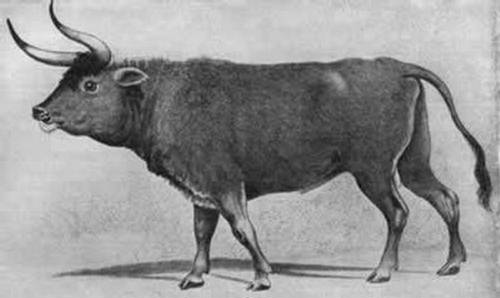
Aurochs: a very large type of cattle (extinct since 1627) Amazing

 http://img.xcitefun.net/users/2010/01/143473,xcitefun-extinct-animals-aurochs.jpg

Aurochs: a very large type of cattle (extinct since 1627)

One of Europe's most famous extinct animals, the aurochs or urus (Bos primigenius) were a very large type of cattle. Aurochs evolved in India some two million years ago, migrated into the Middle East and further into Asia, and reached Europe about 250,000 years ago. By the 13th century A.D., the aurochs' range was restricted to Poland, Lithuania, Moldavia, Transylvania and East Prussia. The right to hunt large animals on any land was restricted to nobles and gradually to the royal household. As the population of aurochs declined, hunting ceased but the royal court still required gamekeepers to provide open fields for the aurochs to graze in. The gamekeepers were exempted from local taxes in exchange for their service and a decree made poaching an aurochs punishable by death. In 1564, the gamekeepers knew of only 38 animals, according to the royal survey. The last recorded live aurochs, a female, died in 1627 in the Jaktorów Forest, Poland. The skull was later taken by the Swedish Army and is now the property of Livrustkammaren in Stockholm.

In the 1920s two German zookeepers, the brothers Heinz and Lutz Heck, attempted to breed the aurochs back into existence (see breeding back) from the domestic cattle that were their descendants. Their plan was based on the conception that a species is not extinct as long as all its genes are still present in a living population. The result is the breed called Heck Cattle, 'Recreated Aurochs', or 'Heck Aurochs', which bears an incomplete resemblance to what is known about the physiology of the wild aurochs

Great Auk: largest of all auks (extinct since 1844) Amazing


http://www.petermaas.nl/extinct/speciesinfo/images/GreatAuk-Harder.jpg

http://img.xcitefun.net/users/2010/01/143470,xcitefun-extinct-animals-great-auk.jpg
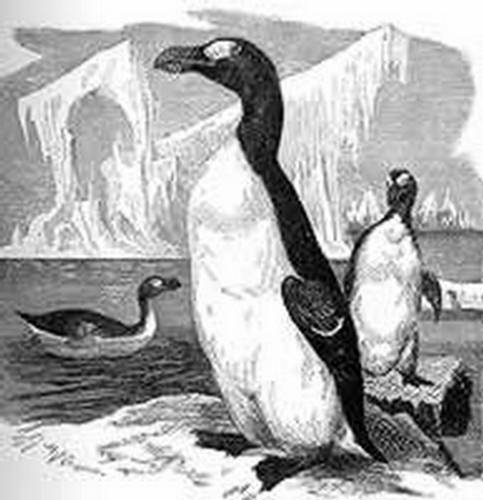
Great Auk: largest of all auks (extinct since 1844)

The Great Auk was the only species in the genus Pinguinus, flightless giant auks from the Atlantic, to survive until recent times, but is extinct today. It was also known as garefowl, or penguin.

Standing about 75 centimetres or 30-34 inches high and weighing around 5 kg, the flightless Great Auk was the largest of the auks. It had white and glossy black feathers. In the past, the Great Auk was found in great numbers on islands off eastern Canada, Greenland, Iceland, Norway, Ireland and Great Britain, but it was eventually hunted to extinction. Remains found in Floridan middens suggest that at least occasionally, birds ventured that far south in winter as recently as in the 14th century.

Dodo: the archetype of extinct species


 Dodo: the archetype of extinct species (extinct since late 17th century) 10 Most Amazing Extinct Animals Anything picture 

Dodo: the archetype of extinct species (extinct since late 17th century)  
 

The Dodo (Raphus cucullatus) was a flightless bird that lived on the island of Mauritius. Related to pigeons and doves, it stood about a meter tall (three feet), lived on fruit and nested on the ground. The dodo has been extinct since the mid-to-late 17th century. It is commonly used as the archetype of an extinct species because its extinction occurred during recorded human history, and was directly attributable to human activity. The adjective phrase "as dead as a dodo" means undoubtedly and unquestionably dead. The verb phrase "to go the way of the dodo" means to become extinct or obsolete, to fall out of common usage or practice, or to become a thing of the past. 

Quagga: half zebra, half horse (extinct since 1883) Amazing


http://halfgoon.files.wordpress.com/2006/12/quagga.jpg


http://img1.ranker.com/user_node_img/50002/1000036216/C300/u1.jpg

Quagga: half zebra, half horse (extinct since 1883)


One of Africa's most famous extinct animals, the quagga was a subspecies of the plains zebra, which was once found in great numbers in South Africa's Cape Province and the southern part of the Orange Free State. It was distinguished from other zebras by having the usual vivid marks on the front part of the body only. In the mid-section, the stripes faded and the dark, inter-stripe spaces became wider, and the hindquarters were a plain brown. The name comes from a Khoikhoi word for zebra and is onomatopoeic, being said to resemble the quagga's call.

The quagga was originally classified as an individual species, Equus quagga, in 1788. Over the next fifty years or so, many other zebras were described by naturalists and explorers. Because of the great variation in coat patterns (no two zebras are alike), taxonomists were left with a great number of described "species", and no easy way to tell which of these were true species, which were subspecies, and which were simply natural variants. Long before this confusion was sorted out, the quagga had been hunted to extinction for meat, hides, and to preserve feed for domesticated stock. The last wild quagga was probably shot in the late 1870s, and the last specimen in captivity died on August 12, 1883 at the Artis Magistra zoo in Amsterdam.

Because of the great confusion between different zebra species, particularly among the general public, the quagga had become extinct before it was realized that it appeared to be a separate species. The quagga was the first extinct creature to have its DNA studied. Recent genetic research at the Smithsonian Institution has demonstrated that the quagga was in fact not a separate species at all, but diverged from the extremely variable plains zebra.

Tyrannosaurus Rex (extinct 65 million years ago) Amazing

 http://www.rareresource.com/photos/dinosaur-gallery/tyrannosaurus-rex.jpg

 http://www.badassoftheweek.com/trex.jpg

Tyrannosaurus Rex (extinct 65 million years ago)


Tyrannosaurus rex was one of the largest land carnivores of all time, measuring up to 43.3 feet long, and 16.6 ft tall, with an estimated mass that goes up to 7 tons. Like other tyrannosaurids, Tyrannosaurus was a bipedal carnivore with a massive skull balanced by a long, heavy tail. Relative to the large and powerful hindlimbs, Tyrannosaurus forelimbs were small and they retained only two digits.

Fossils of T. rex have been found in North American rock formations dating to the last three million years of the Cretaceous Period at the end of the Maastrichtian stage, approximately 68.5 to 65.5 million years ago; it was among the last dinosaurs to exist prior to the Cretaceous-Tertiary extinction event. More than 30 specimens of T. rex have been identified, some of which are nearly complete skeletons. Some researchers have discovered soft tissue as well. The abundance of fossil material has allowed significant research into many aspects of its biology, including life history and biomechanics.

Thylacine: The Tasmanian Tiger


http://www.kidcyber.com.au/IMAGES/thylacine_captive.jpg

http://www.moldred.org/images/tasmaniantigerpaintingrodscott_3.jpg

Thylacine: The Tasmanian Tiger (extinct since 1936)


The Thylacine was the largest known carnivorous marsupial of modern times. Native to Australia and New Guinea, it is thought to have become extinct in the 20th century. It is commonly known as the Tasmanian Tiger (due to its striped back), and also known as the Tasmanian Wolf, and colloquially the Tassie (or Tazzy) Tiger or simply the Tiger. It was the last extant member of its genus, Thylacinus, although a number of related species have been found in the fossil record dating back to the early Miocene.

The Thylacine became extinct on the Australian mainland thousands of years before European settlement of the continent, but survived on the island of Tasmania along with a number of other endemic species such as the Tasmanian Devil. Intensive hunting encouraged by bounties is generally blamed for its extinction, but other contributory factors may have been disease, the introduction of dogs, and human encroachment into its habitat. Despite being officially classified as extinct, sightings are still reported.
 
Support : Amazing Things | Desinged by
Copyright © 2011. Amazing Things - All Rights Reserved
Template Created by Amazing Things Published by Amazing Things
Proudly powered by Amazing Things